
Sometimes it might be challenging to properly classify the correction done during Loc QC. At the same time it's also very important to apply correct category based on Netflix's expectations and guidelines.
Here are some best practices for QCers that are based on Error Category Examples and Descriptions, Error Code Cheat Sheet, Error Code Selection Logic Cheat Sheet, Error Code training and other reference materials:
1) Timing to Audio Issues
- Impactful, noticeable timing issues (like an event starting half a second before the actual audio) should be classified as Timing to Audio.
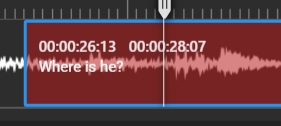
- Slight 1-3 frames adjustments should be classified as Timing Subjective. Please remember that most of the major issues should be addressed during the template creation. Any adjustments to the timing during the QC process is mostly considered minor.
2) Spelling, Grammar, Punctuation
- SGP should be applied to all objective grammar errors, like wrong grammar categories, endings, syntax etc.
- She live here.
- They is there.
- Did she went there?
- SGP should be applied to all objective grammar errors, like wrong grammar categories, endings, syntax etc.
- She is beuatiful.
- He never workeded there.
- Hello,Steve!
- SGP should be applied to all noticeable, objectively wrong punctuation usage, like missing, redundant, wrongly applied punctuation:
- Hello Why are you here
- Shall we go. now?
- Don't — go there!
- SGP should be applied to meaning-altering, wrongly applied punctuation that changes the meaning of a sentence or makes it hard to understand:
- “Let's eat, Grandma!" vs. "Let's eat Grandma!"
- “No free parking after 6. vs. No, free parking after 6.
- “Slow children crossing” vs. “Slow, children crossing”
- Consider applying Translation Subjective to minor punctuation fixes that are unlikely to be noticed by viewers, are debatable or tricky, and do not alter the meaning. This includes tricky cases of missing or redundant commas, extra spaces etc.
3) Subjective vs Objective Errors
Objective errors are significant issues that impact the accuracy, clarity, and appropriateness of a translation. These are always considered Major and are likely to be noticed by the audience.
Specifically, Objective errors include:
- Factual Inaccuracies: The translation presents information that is factually incorrect or inconsistent with the story's context.
- Lack of Clarity: The translation is difficult to understand, causing the viewer to pause and re-read to grasp the meaning.
- Awkward or Unidiomatic Language: The word choice is noticeably unnatural, ambiguous, or not how a native speaker would express it, leading to confusion or a clumsy reading experience.
- Tone Alteration: The translation significantly changes the intended tone, such as neutralizing profanity without justification, using an incorrect level of formality (e.g., formal instead of informal), or inappropriately neutralizing humor.
- Cultural Insensitivity: The translation includes elements that are culturally inappropriate or offensive.
Minor issues that are unlikely to be noticed by the audience should not be classified as Objective; these should be considered Subjective errors instead.
Here are some additional tips:
Style
- The translation doesn’t read as an originally written text and is visibly awkward — this should be Objective.
- The translation is colloquial, non-literary (but people could still say like that in real life), it could be found on the Internet, it is a common practice for ordinary people etc. — this should be Subjective.
Accuracy
- The translation contains noticeable inaccuracy issue that could confuse the viewer — this should be Objective.
- Non-impactful change due to shades of meaning that won’t impact viewability — this should be Subjective.